
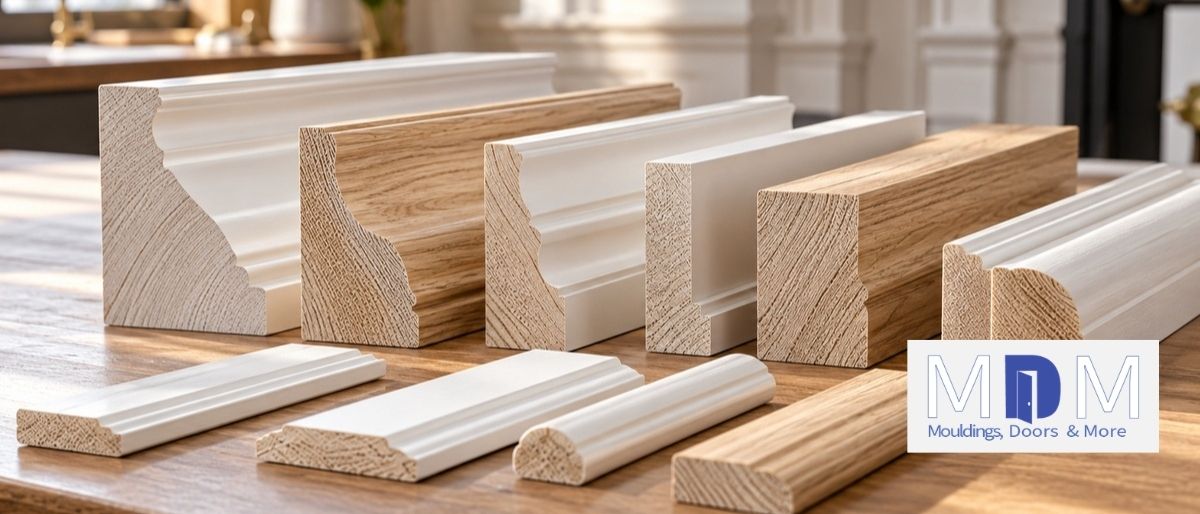
A wall of moulding samples can feel like a collection of very small decisions. One curve is deeper. One edge is flatter. One board is a little taller. Once installed throughout a room, however, those small differences become a major part of the home’s character.
The best starting point is your house itself. Its ceiling heights, existing doors, connected rooms and finish palette provide more useful guidance than whichever profile happens to be popular. Choose mouldings as a related set of details rather than separate decorative purchases.
Read the architectural clues
A simple interior often works well with restrained profiles and clear edges. A more traditional room may support layered shapes and greater detail. Neither approach needs to become a rigid rule, but the surrounding architecture should have a voice in the decision.
Photograph the existing trim you intend to keep. Include nearby openings and the floor so the relationship is visible. If only one room is changing, pay special attention to where the new mouldings will meet older profiles in a connected space.
Test scale before committing
Hold a sample near the actual wall or opening and step back. A profile that looks substantial on a counter may appear small against a tall wall. Conversely, heavy trim can crowd a compact space or compete with detailed doors.
Compare baseboards and casing together. Consider the projection of each piece as well as its face width. Corners, narrow wall sections and adjoining cabinets may influence what can fit comfortably. Sample-based decisions make these constraints easier to see.
Choose with the final finish in mind
Painted trim and stained wood place different demands on material selection. If the grain will remain visible, review species, natural variation and how the finish looks on an actual sample. If the trim will be painted, ask which available options suit the preparation and finish you plan to use.
Keep the whole room’s palette nearby when evaluating samples. Flooring, doors and existing woodwork affect how a stain reads. A close match on a screen is less useful than seeing the materials together under the room’s own lighting.
Order a complete solution
Before purchasing, discuss quantities, lengths, corners and finishing needs with the person responsible for the installation. Allowances depend on layout and cutting requirements, so avoid ordering from room perimeter alone. Confirm availability and any special-order details before setting the installation date.
Mouldings Doors and More offers mouldings in multiple styles, sizes and wood species, along with special-order options. Bring samples or clear photos to the Vadnais Heights team. A considered selection can give every doorway and wall edge a more intentional place in your home.
Explore mouldings with Mouldings Doors and More. Call (651) 486-7194 to discuss your project.
continue reading
Related Posts
A door that squeaks, sticks, or refuses to latch might seem like a minor annoyance. But everyday door problems can
November is a natural time to notice what works in your home and what does not. Maybe the kitchen feels
A staircase is easy to overlook when you use it several times a day. Then you see it in a
You repaired the hole, painted the spot and waited for it to disappear. Then the afternoon light crossed the wall,
Flooring samples make the visible choice easy to imagine. You can picture a lighter plank opening up the room or
You find a lever you love, choose a finish, and then discover the version in your cart does not lock.
The paint is new. The furniture is back. The flooring looks beautiful. Yet the room still feels as though one
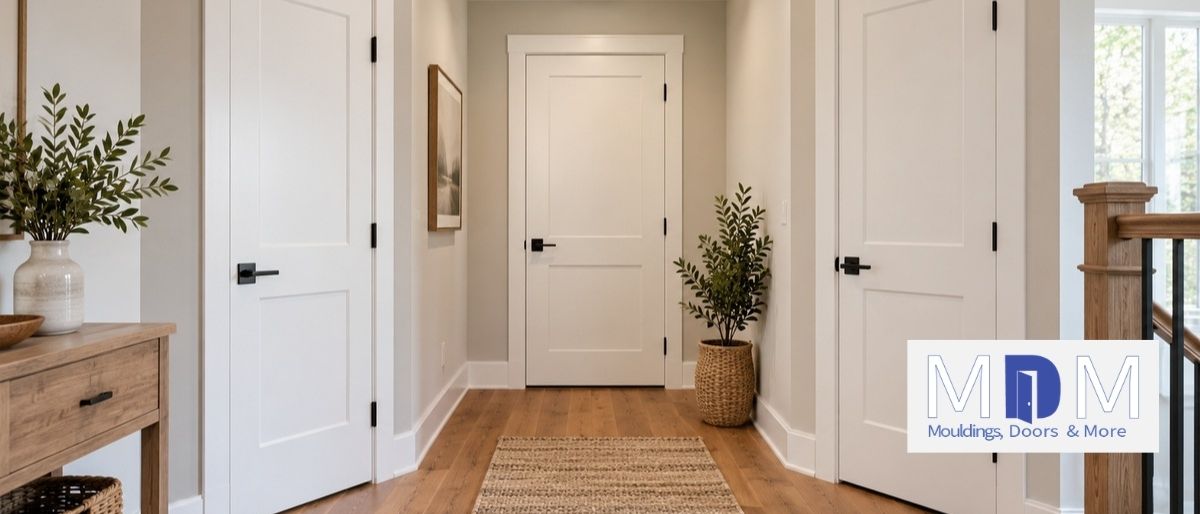
Stand at the end of your hallway and count the doors you can see. There may be bedrooms, a bathroom,
The loose handle gets another quick wiggle. The trim piece stays on the shelf. The small repair in the spare
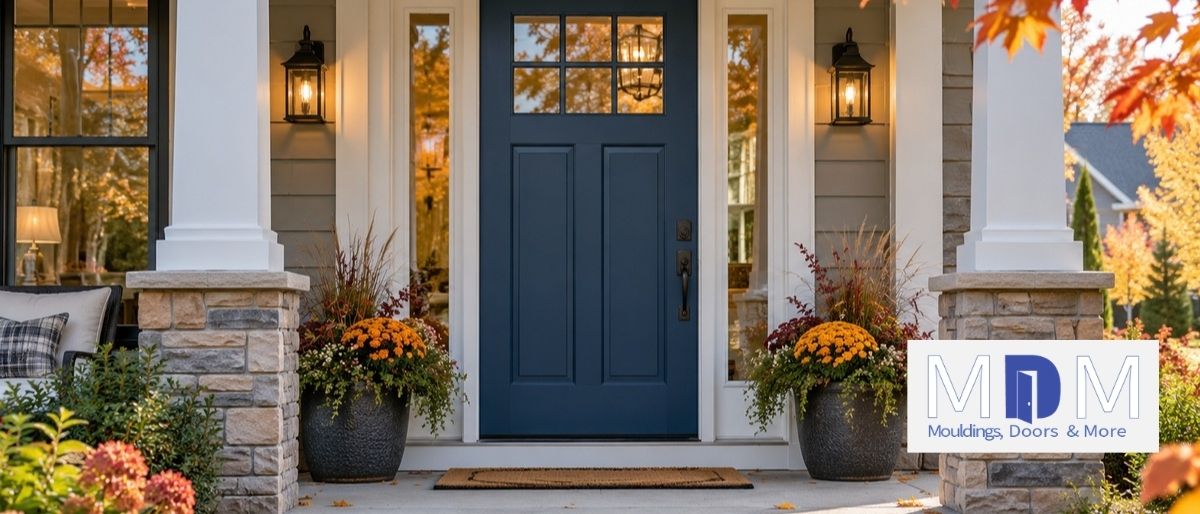
A front door has two very different jobs: welcome people in and separate the house from the weather outside. Most
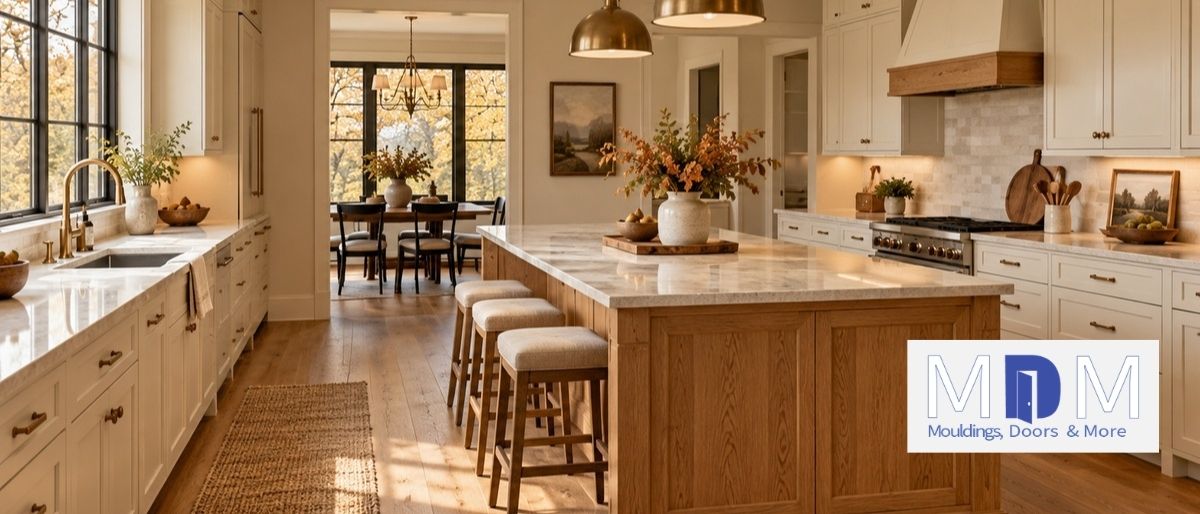
At 7:30 on a weekday, a kitchen tells you more about its design than any showroom ever could. Someone needs
Interior doors rarely stand alone visually. Every door is framed by casing, connected to baseboards, surrounded by wall color, and