
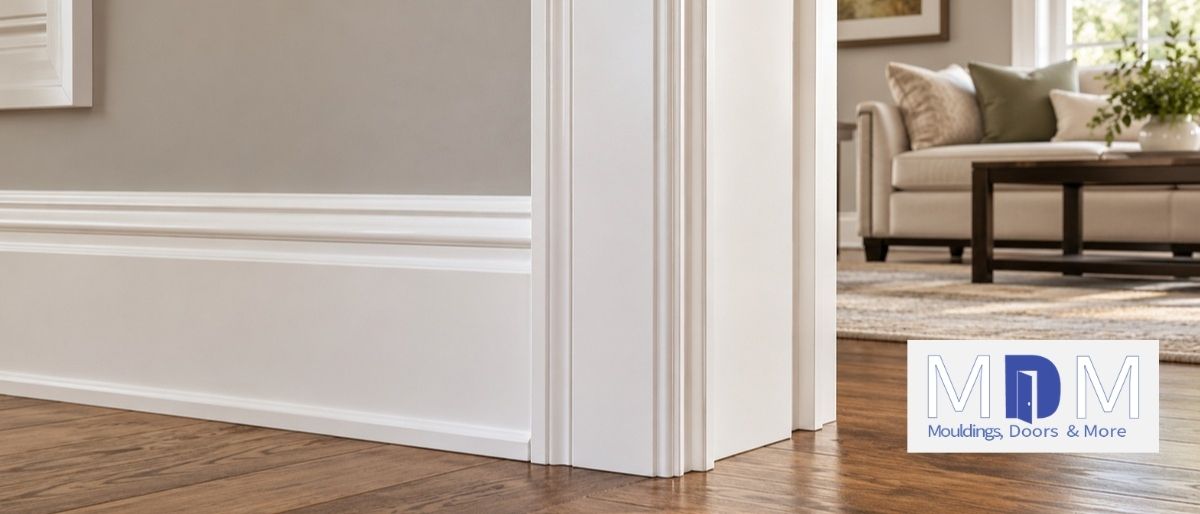
The paint is new. The furniture is back. The flooring looks beautiful. Yet the room still feels as though one more step is missing. Often, the eye is catching the places where surfaces meet: a bare edge, an awkward transition or trim that no longer suits the updated space.
Finish carpentry gives those edges a deliberate appearance. It is the work that helps individual improvements read as one complete room. When planning a refresh, it deserves a place in the budget and schedule from the beginning.
Look at the intersections
Follow the baseboard around the room. Notice where it meets door casing, changes direction or stops at an opening. Look at the relationship between the trim and the flooring. Those small junctions repeat throughout a house, which makes inconsistent details surprisingly noticeable.
Walls and floors are not always perfectly straight, especially in an existing home. Careful fitting matters more than simply cutting every piece to a theoretical dimension. A finish carpenter considers the actual surfaces and how the completed lines will look together.
Let proportions do the quiet work
A substantial door casing beside a very small baseboard may feel unbalanced. A decorative crown profile may compete with a restrained interior. There is no universal trim size that suits every room; scale and the relationship between profiles are more useful starting points.
Evaluate samples near the actual openings when possible. Consider how the trim reads from across the room, not just at arm’s length. Repeating compatible proportions through connected spaces can make a renovation feel settled rather than pieced together.
Appearance and operation belong together
A door should look aligned and also move, latch and clear surrounding surfaces properly. Hardware placement, fitting and the condition of the opening all contribute. Decorative details lose their appeal quickly when everyday use becomes awkward.
Discuss adjacent work before installation begins. A flooring change can affect clearances; wall repairs can influence the final trim fit. Coordinating those tasks helps establish an appropriate sequence and clarifies which finishing steps are included in the project.
Define what “finished” includes
Ask about installation, fitting, nail-hole treatment, caulking where appropriate, and the planned paint or stain work. Different materials and finishes call for different preparation. A clear scope keeps the last steps from becoming an unexpected separate project.
Mouldings Doors and More provides finish carpentry for doors, casing, baseboards, crown molding and related millwork. If your room feels almost complete, ask the team to review the details connecting its surfaces. Sometimes the most satisfying change happens along the edges.
Explore finish carpentry with Mouldings Doors and More. Call (651) 486-7194 to discuss your project.
continue reading
Related Posts
Stand at the end of your hallway and count the doors you can see. There may be bedrooms, a bathroom,
The loose handle gets another quick wiggle. The trim piece stays on the shelf. The small repair in the spare
A front door has two very different jobs: welcome people in and separate the house from the weather outside. Most
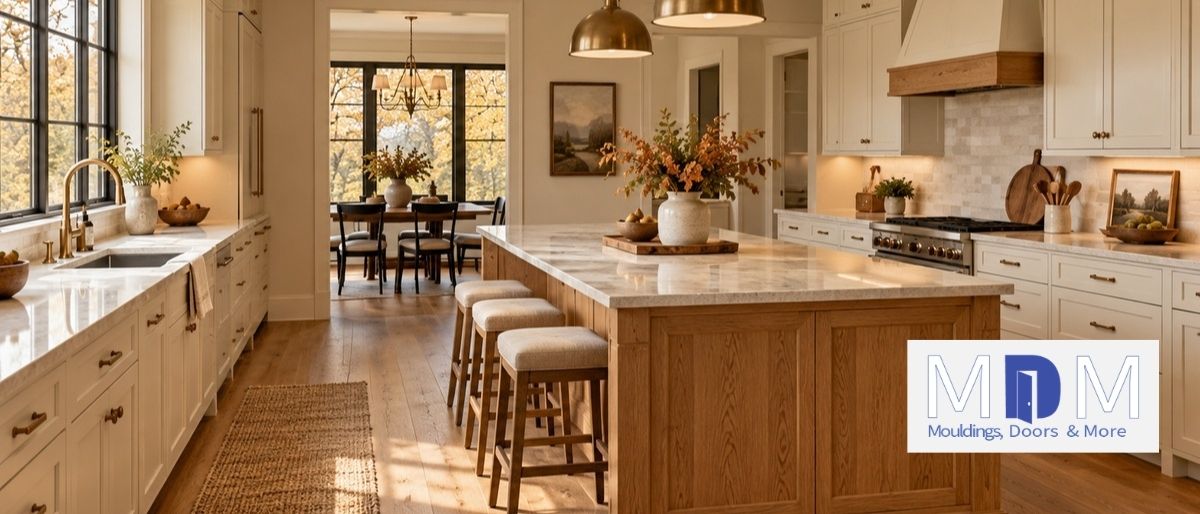
At 7:30 on a weekday, a kitchen tells you more about its design than any showroom ever could. Someone needs
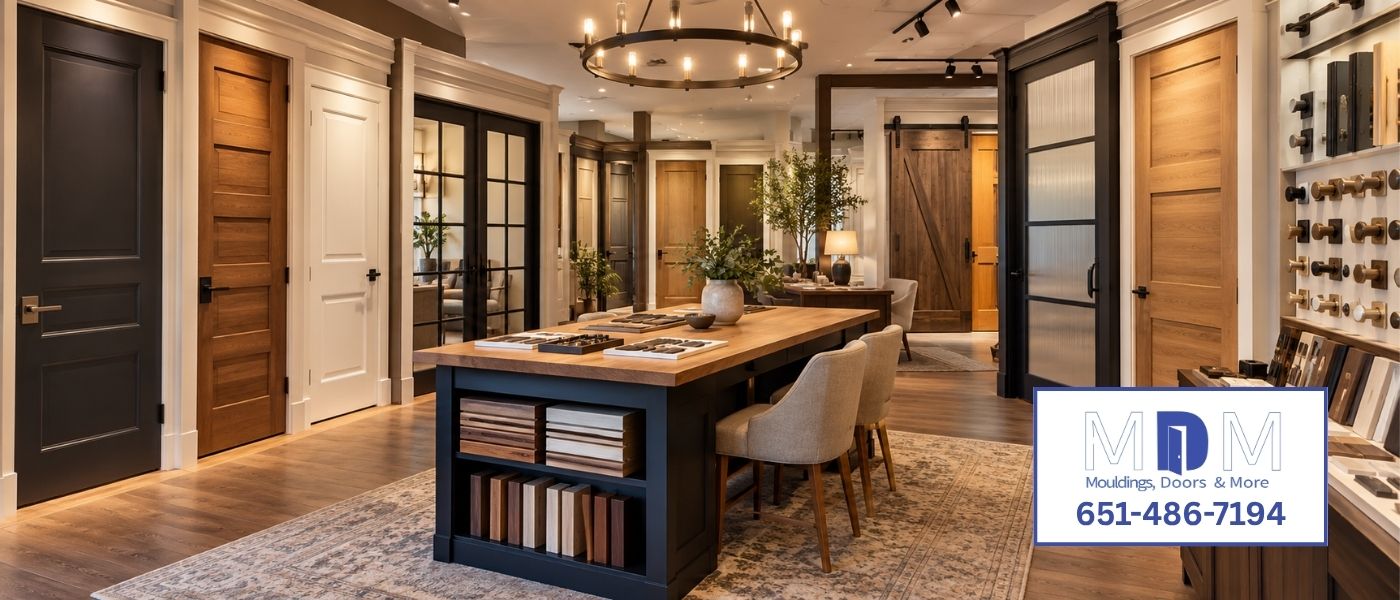
Interior doors rarely stand alone visually. Every door is framed by casing, connected to baseboards, surrounded by wall color, and
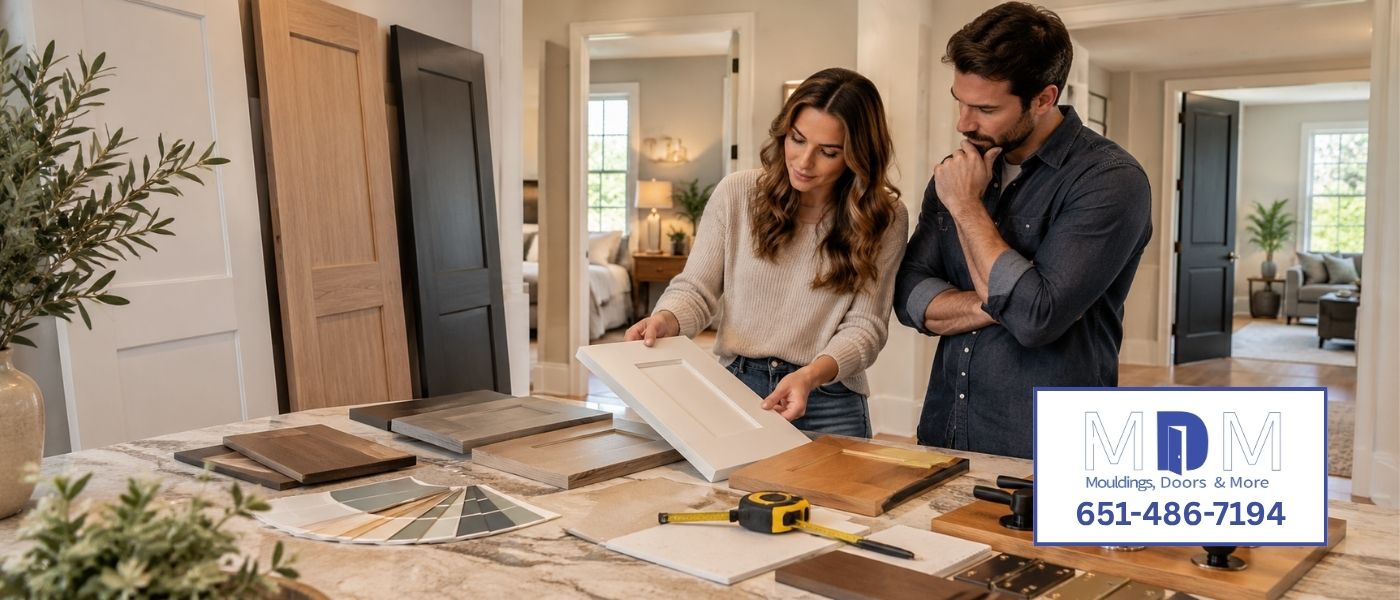
When homeowners begin shopping for interior doors, price is often one of the first things they compare. A big-box store
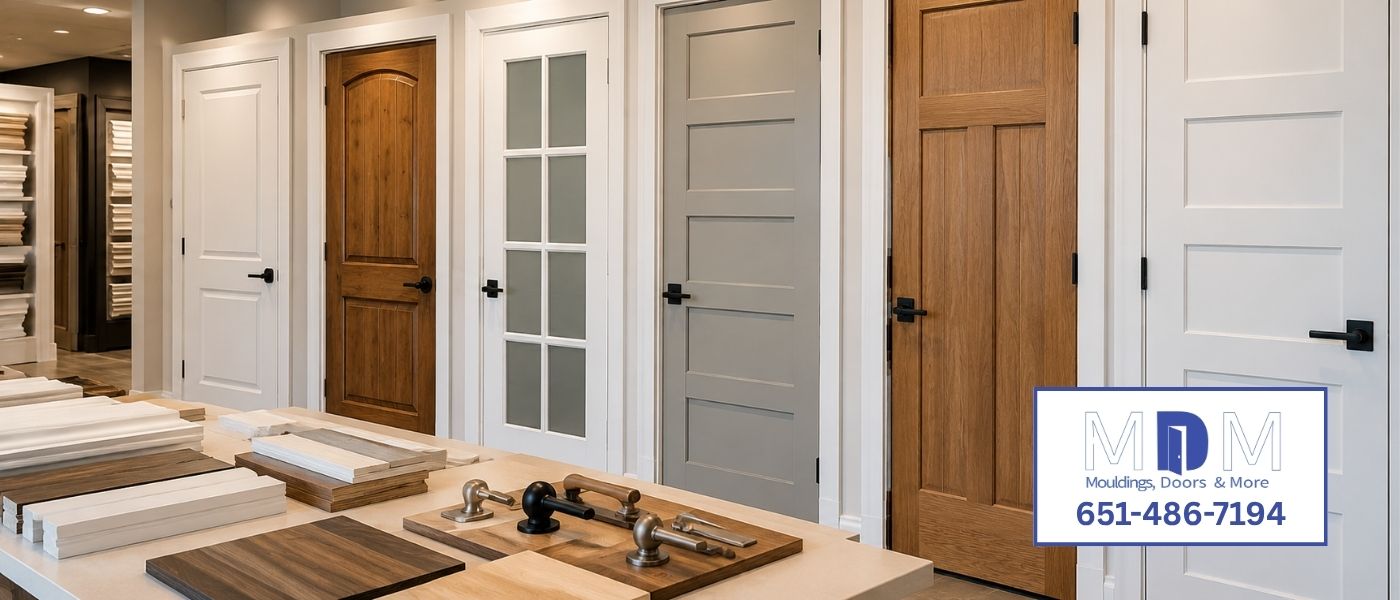
Interior doors do much more than separate one room from another. They affect privacy, sound, traffic flow, light, storage access,
Two interior doors can look almost identical from across the room while feeling completely different when you open and close

Shopping for interior doors can look simple at first. You choose a style, pick a size, load it into the
A staircase is necessary for moving between floors, but that doesn’t mean it has to be purely functional. In many
Some of the most important design elements in a home aren’t necessarily the largest ones. Mouldings run quietly around floors,
You can spend considerable time choosing the perfect door, but the project is not truly complete until you choose the